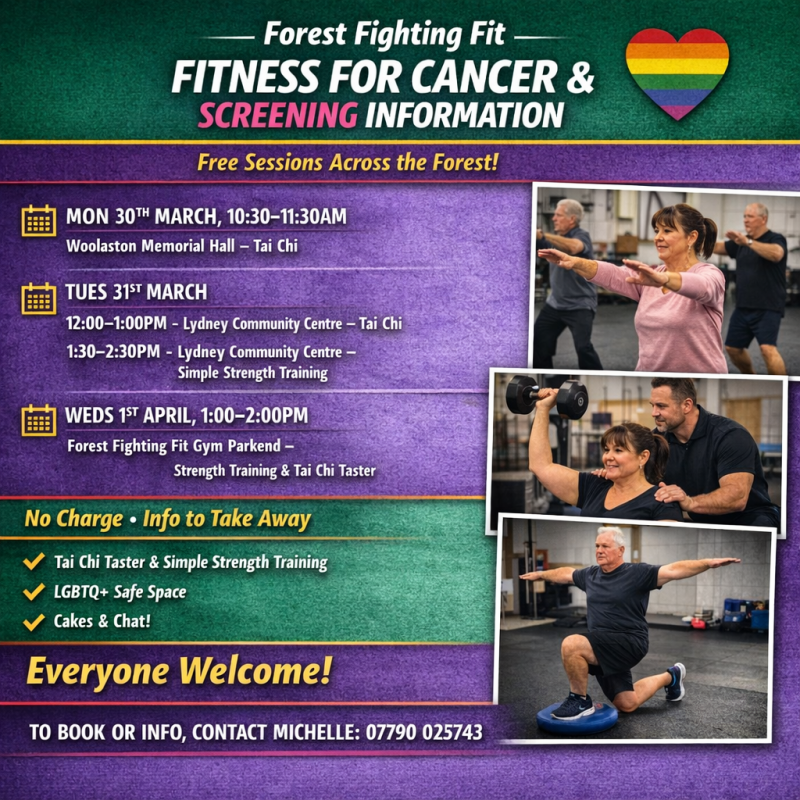
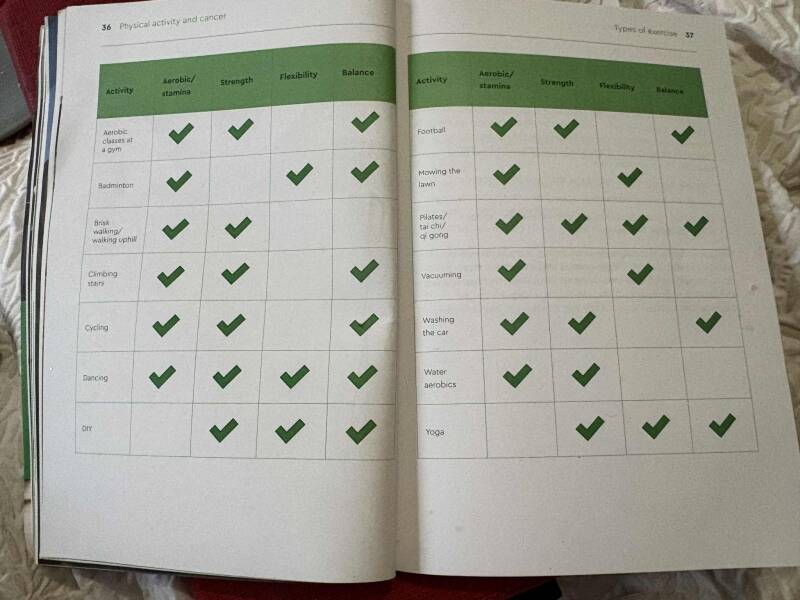
Fitness for Cancer and Screening information session Monday 30 th March 10.30-11.30 Woolaston Memorial Hall ( Tai Chi ) Tuesday 31 st March 12-1 pm (Tai chi )and 1.30-2.30 ( simple strength training) Lydney Community Centre Wednesday 1 st April 1-2 Forest Fighting Fit Gym Parkend ( Simple strength training and Tai Chi Taster ) No charge for sessions Screening information to take away available Tai chi taster - Tai Chi is one of the three types of exercise identified by MacMillan that covers all aspects of fitness ( cardio and stamina / strength / flexibility / balance ). Or simple strength training LGBTQ+ safe space There’s a high chance of cake Contact Michelle on 07790025743 for queries and booking or just pop along on the day.
Knowledge is power, and our mission is to make cancer screening accessible and encouraged for everyone—especially members of the LGBTQ+ community. Screening saves lives, but it can feel daunting, so we’re working to make information and support easier to reach.
Woolaston Memorial Hall, Ruspidge Memorial Hall, and Forest Sensory Services will host information stations where you can learn more about screening, early detection, and support options. If you can’t access these centres and would like printed materials, you can request them by emailing whitelotusuk@aol.com.
Exercise plays a powerful role throughout the entire cancer journey. Evidence continues to grow showing that physical activity can support recovery from treatment, improve quality of life, and even reduce the likelihood of cancer returning. We offer short courses on exercise and cancer, along with a personalised guidance service to help you find the type of movement that suits your needs before diagnosis, after diagnosis, and before, during, and after treatment.
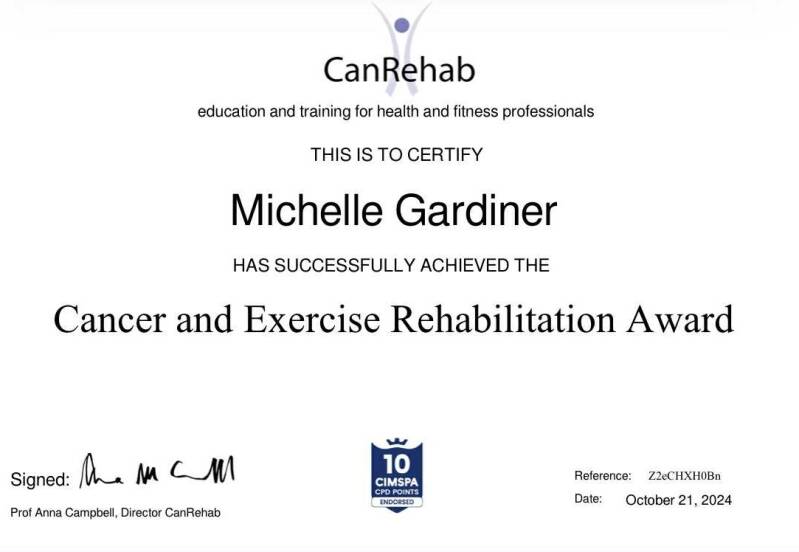
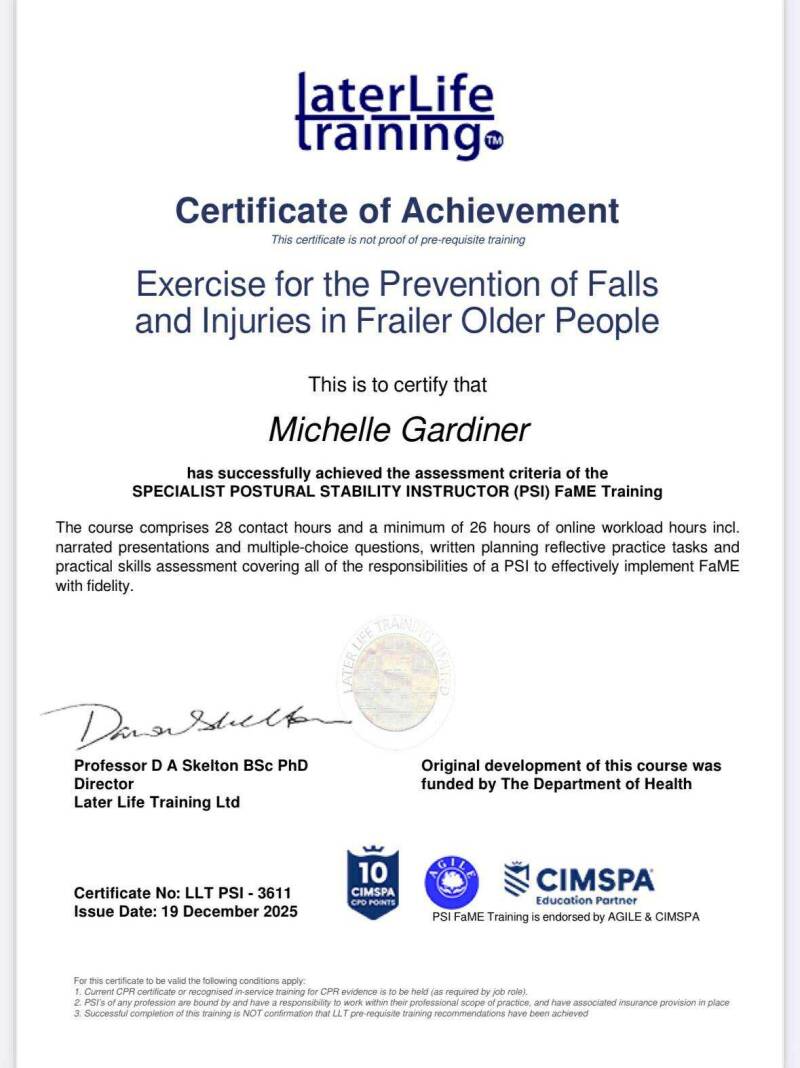
All sessions are led by a qualified cancer rehab clinical exercise specialist, ensuring safe, informed, and supportive guidance every step of the way.
We’ve had a lot of concern over 70 plus screening so hopefully this information will be useful -
‘ Although cancer increases with age the NHS doesn’t routinely invite most people over 70 for screening. This is driven by evidence based national policy rather than lack of priority. Cancer screening is only offered routinely when research clearly shows that the benefits outweigh the harms for a particular age group. Slower-growing cancers in older age means screening is less likely to detect something that will impact life expectancy. Secondly the risk of overdiagnosis rises — i.e., finding cancers that would never have caused harm, but could lead to unnecessary treatment and side‑effects so as a result the Screening committees only continue invitations where there is strong population‑level benefit, which becomes less certain in older age groups
As it stands
Breast screening invitations stop at 71, though women can still book a mammogram by self referral
Bowel screening invitations stop at 74, but people over 74 can request a kit
Cervical screening stops at 64 because the risk of new HPV‑related cervical changes after this age is very low.
For older adults symptom awareness, rapid GP assessment and targeted scans and test provide more benefit than blanket population screening invitations

Create Your Own Website With Webador